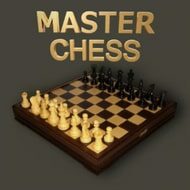
Master Chess offers a structured board experience focused on evaluation, timing, and positional awareness. Rather than encouraging impulsive exchanges, Master Chess emphasizes long-term planning and consequence-based decisions. Each move subtly reshapes future possibilities, requiring players to balance pressure, defense, and opportunity.
Positional Thinking Over Immediate Trades
In Master Chess, capturing pieces is rarely the primary goal. The game encourages players to consider space control, alignment, and potential responses before committing to exchanges. Small positional shifts often carry greater weight than material gain.
- Central influence supports mobility
- Piece coordination strengthens defense
- Threat anticipation prevents forced losses
Structured Practice and Scenario Control
Master Chess provides controlled situations that isolate decision-making patterns. These scenarios remove unnecessary variables and allow repeated exposure to similar challenges, helping players develop consistency without memorization.
- Mid-board tension resolution
- Reduced-material positioning
- Threat-and-response evaluation
Timing, Simplification, and Risk
Many players ask how to reach winning positions faster. In Master Chess, efficiency comes from simplifying the board at the right moment. Reducing complexity improves clarity and limits opponent counterplay.
- Delayed exchanges preserve options
- Predictable structures reduce risk
- Gradual simplification improves control
Learning From Mistakes
Errors in Master Chess serve as feedback loops. Replaying sequences helps identify misjudged positions and timing errors. Over time, recurring patterns become easier to recognize, leading to improved decision confidence.
Master Chess values discipline and reflection over spectacle. Through structured scenarios and positional clarity, the game supports steady improvement and rewards players who prioritize understanding over impulse.