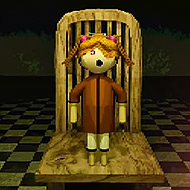
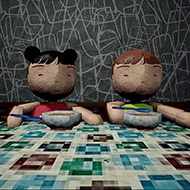
Play Things is an interactive game focused on exploration, experimentation, and observation. Players are encouraged to engage with objects and elements in a virtual space, discovering how each responds to different interactions. The game emphasizes creativity and curiosity, allowing multiple approaches to challenges while rewarding experimentation. Success depends on understanding object behavior, sequencing actions, and observing environmental cues.
Object Interaction and Core Mechanics
The main mechanic in Play Things revolves around manipulating objects to produce effects or trigger events. Each object responds uniquely depending on the type of input and timing. Learning how objects react to different interactions is key to progression and unlocking hidden possibilities.
- Manipulation: Objects can be tapped, dragged, rotated, or combined with others to achieve specific effects.
- Reaction observation: Subtle differences in input often create entirely different outcomes.
- Combination mechanics: Interacting with multiple objects simultaneously can produce chain reactions.
- Timing sensitivity: Delayed or premature interactions may result in unexpected consequences.
- Environmental feedback: Changes in surroundings indicate how objects respond to player actions.
Stage Design and Progression
Levels in Play Things are designed to gradually introduce complexity. Early stages focus on single-object interactions, while later levels incorporate multiple elements, hidden triggers, and sequences that require precise coordination. Players must observe cause-and-effect relationships to solve more intricate challenges.
- Initial stages focus on learning single-object responses.
- Intermediate levels combine multiple objects requiring sequential interactions.
- Advanced stages include hidden reactions and interconnected mechanisms.
- Exploration-based zones encourage testing unconventional approaches.
- Complex setups reward careful observation and experimentation over trial and error.
Player Strategies and Optimization
Many players ask whether there is a fixed solution for each stage. While some challenges have optimal strategies, Play Things encourages creativity. Success often comes from testing different interactions, observing outcomes, and adapting actions accordingly. Building familiarity with object behavior allows players to develop efficient strategies for complex scenarios.
- Experiment with multiple inputs for each object to understand reactions.
- Observe chain reactions to identify patterns and optimal sequences.
- Combine objects creatively to unlock hidden interactions or shortcuts.
- Use early attempts to analyze safe and effective strategies for future stages.
- Adapt approaches based on trial observations rather than repetition alone.
Engagement and Replay Value
Play Things maintains long-term engagement by rewarding experimentation and exploration. Each level contains unique objects and interactions that encourage discovery. Players can revisit stages to test new approaches, uncover hidden outcomes, and refine their understanding of object behavior, making the game highly replayable.
In conclusion, Play Things is a creative and interactive game where experimentation and observation are central. Success depends on understanding object behavior, planning sequences, and exploring combinations. With diverse interactions and high replay value, the game offers an engaging and rewarding experience for curious players.