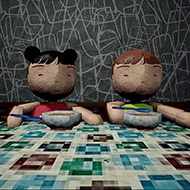
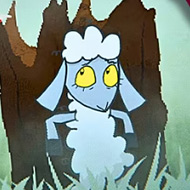
You type a word into the machine’s input slot, and somewhere behind the glass a mechanism grinds into motion to produce whatever you just asked for, no matter how impossible it should be. Anomalous Coffee Machine 2 hands you the strangest interface in recent memory — a vending machine that takes language as its only ingredient — and then asks the much harder question of who’s actually going to drink what it makes.
A Machine That Understands Language, Not Menus
There’s no button grid, no preset drink list. You type any word or short phrase you want, and the machine interprets it, producing a result that reacts to what you asked for rather than pulling from a fixed inventory. That openness is the entire hook — the game rewards curiosity about what the machine can actually do with a given input more than it rewards any specific “correct” strategy, and a huge part of the appeal is simply experimenting to see what comes out.
The girl standing across from you and the machine isn’t a passive prop in this exchange. She reacts to your choices, to the words you feed the machine, and to what happens once the result is sitting between you both. Her presence turns a novelty gimmick into something closer to a two-person scene, where the machine is really just the mechanism through which the actual interaction — between you and her — plays out.
Deciding Who Drinks the Result
Once the machine produces something, you choose who consumes it — yourself or her — and the story branches based on that choice rather than following a single fixed script. This is where the game becomes less about the novelty of a talking coffee machine and more about consequence: every combination of word and recipient nudges the scene in a slightly different direction, and the narrative tracks those choices rather than resetting to a neutral state after each one.
Because the input space is language itself, no two players are likely to see the exact same sequence of outcomes on a first pass. That variability is one of the more debated aspects of the game — some players love the open-ended unpredictability, while others find it harder to pursue a specific narrative thread without guidance, since there’s no menu telling you which words matter most.
Following the First Anomalous Coffee Machine
This is a direct sequel, built after roughly seven months of continued development on the original concept, and returning players will notice the interpretation system feels more responsive than the first game’s — a wider range of typed input produces a reaction instead of a generic fallback response. New players don’t need the first game to follow what’s happening, but the sequel does assume a certain comfort with the format’s strangeness that the original spent its runtime establishing.
Two Editions, Two Different Experiences
The game is available in more than one form: a full version on Steam, and a Safe Edition on itch.io aimed at players who want the same interactive core without its more explicit content. The Safe Edition doesn’t change the underlying mechanic — you’re still typing words into a machine and choosing who drinks the result — it just adjusts what those outcomes are allowed to show, which makes the format accessible to a wider range of players without altering what actually makes it interesting.
Between the two versions, what most people want to know before starting is whether the “correct” way to play is to experiment freely or plan out specific inputs in advance — and the honest answer is that the game is built around the former. Typing whatever comes to mind and watching how the machine and the girl react is the intended experience, and treating it like a puzzle with one right solution tends to undersell what the writing is actually doing with your input.
Anomalous Coffee Machine 2 works because it commits fully to a strange premise instead of hedging it with a safety net of preset choices. By the time you’ve typed your fifth or sixth word into the slot and watched the story shift again in response, the machine has stopped feeling like a gimmick and started feeling like the most honest interface the game could have chosen for what it’s actually about.