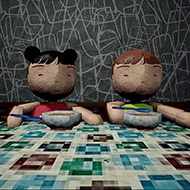
In Family Secrets 1: Empty Plate you start with almost nothing to go on — a phone call, a quiet house, and a little brother who is suddenly your full responsibility. Miko picks up the phone, hears his mother say she has to leave for work for a few days, and from that moment the ordinary rhythm of an evening at home starts to feel wrong. There is no tutorial popup explaining what is coming, no health bar in the corner, no marker pointing toward danger. You just walk through rooms with Jun trailing behind you, and the silence does most of the work.
Miko, Jun, and the Weight of an Empty Fridge
The setup sounds almost mundane at first. Miko is a young teenager left in charge of his younger sibling, Jun, while their mother is supposedly away working. Caring for a child while being one yourself is not a fantasy hook, and the game leans into that discomfort rather than dressing it up. Meals get smaller. The fridge, at one point, holds nothing but a single unwashed plate, and that detail is doing more narrative work than any jump scare could. Players who come in expecting a monster-filled house are usually surprised by how domestic the first hour feels.
What makes the setup land is how ordinary the early problems are. Miko tells Jun their mother will be back soon, and he seems to believe it, which reads less like naivety and more like a coping mechanism a real child might use. The game never rushes to explain itself, and that patience is part of what keeps players talking about it after the credits roll.
By the time you reach the second night, the household’s financial strain becomes impossible to ignore — letters about unpaid bills, a fridge that stays empty longer, and a father figure whose presence in the story turns from absent to threatening. The game does not spell out every detail, and it trusts players to sit with the discomfort of piecing it together themselves.
Exploring the House Without a Map
Movement is handled with WASD, interaction and dialogue skipping with E, and the flashlight toggles on and off with F. ESC brings up the pause menu when the tension gets to be too much, which players openly admit happens more than once. There is no inventory grid, no crafting menu, no side quests pulling attention away from the four walls Miko and Jun are stuck inside. That restriction is deliberate, and it is one of the more debated design choices among people who finish the game.
Some players find the lack of a wider map limiting after the first playthrough, since there is nothing to explore once the story has been seen. Others argue that this is exactly why Family Secrets 1: Empty Plate works — a bigger house or a second location would dilute the specific, claustrophobic feeling the developer was going for. Both opinions show up constantly in comment sections, and neither side is wrong exactly, which is part of why the discussion keeps going.
Object interaction rewards patience more than speed. Checking drawers, reading notes left around the house, and paying attention to what Jun says during downtime all add context that a player rushing through dialogue will miss entirely.
Soso and the Logic of Denial
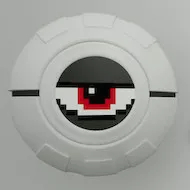
Soso is the strange figure who appears in Jun’s dreams, tempting him with things he should not want — cake, sweets, and eventually behavior that worries Miko more than anything else in the story. Soso never gets a full explanation, and that ambiguity is intentional. Whether Soso represents guilt, hunger, or something closer to a hallucination brought on by trauma is left for the player to decide, and forums are still split on the “correct” reading.
Jun’s allergy to chocolate becomes relevant here too, turning a small domestic detail into something with real narrative weight once Soso starts offering him cake in his dreams. It is the kind of specific, small-scale storytelling choice that separates this game from generic horror titles built around jump scares alone.
Nights Without the Flashlight in Family Secrets 1: Empty Plate
The night sections are where most players say the game earns its reputation. Turning the flashlight off entirely during the first night sequence, before you know the house’s layout, is something a surprising number of players do on purpose after hearing about it from streamers. It removes your only tool and forces you to navigate by sound and memory instead, which several longtime horror fans describe as more unsettling than anything scripted.
The pacing between these quiet stretches and the sharper moments is where the game earns comparisons to slow-burn horror rather than reflex-based scares. There is a hide-and-seek sequence roughly midway through that circulated widely on TikTok and Twitch clips, and it works precisely because the game has spent so long training you to expect nothing.
What Players Actually Debate About Family Secrets 1: Empty Plate
Not everything about the design gets universal praise, and that honesty is worth naming directly. Some players wanted the financial pressure — the unpaid bills, the threat of the electricity being cut off — to actually change the gameplay loop instead of only appearing as flavor text. A stronger mechanical link between the family’s poverty and what the player can physically do in the house is one of the most requested changes in comment threads and reviews. Casual players tend to breeze past this critique since the story alone carries them, while players who prioritize systemic horror design over narrative horror are the ones raising it most often.
Character modeling is another point of disagreement. Miko and Jun are generally well received, but the father figure’s design gets mixed reactions — some find him genuinely unsettling, others think the exaggerated proportions undercut the tension rather than support it. It is a minor complaint in the scope of the whole game, but it comes up often enough to be worth mentioning.
How long does it take to finish Family Secrets 1: Empty Plate?
It is built as a short, linear experience rather than a game with replayable levels or branching paths. Most players get through Miko and Jun’s story in a single sitting, moving from scene to scene as dialogue and events trigger the next stage of the night.
Who is Soso in Family Secrets 1: Empty Plate?
Soso is a mysterious figure who appears specifically in Jun’s dreams, often tied to food and temptation, including cake despite Jun’s chocolate allergy. The game never confirms exactly what Soso is meant to represent, leaving that interpretation to the player.
Does Family Secrets 1: Empty Plate rely on jump scares?
Not primarily. The tension comes more from silence, restricted light during night sections, and the slow reveal of what is actually happening to Miko and Jun’s family, rather than from scripted scare moments popping out at the player.
What sticks with people after finishing Family Secrets 1: Empty Plate is rarely a single scare — it is the empty plate itself, sitting there in the fridge as the quiet proof that something in Miko and Jun’s home has already gone wrong long before the player understands why.