What happens when a quiz stops testing what you know and starts testing whether you trust your own eyes? The Impossible Quiz opens like any other trivia game — a question, four answers, click the right one — and then spends the next hundred-plus questions teaching you that “right” was never the point. This is a game built entirely around the moment your logic fails you, and it has been breaking new players the same way for years.
How The Impossible Quiz Actually Plays
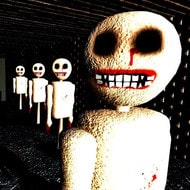
You start with three Lives and a counter that climbs question by question, and both of those numbers matter more than any single answer. Every wrong click costs a Life, three wrong clicks end the run, and the game restarts you from question one — no checkpoints, no mercy, no explanation beyond a skull-faced “Epic Fail” screen that has become as recognizable as the quiz itself. The Hand, the game’s floating cursor mascot, is your only constant companion through all of it, occasionally reacting to your mistakes in ways that feel almost personal.
Answers are presented as normal multiple-choice boxes, but the questions themselves rarely play fair. Some rely on wordplay so literal it loops back around to correct. Some require you to read the question as a visual object rather than a sentence. Others simply lie to you, dressing up an obviously wrong answer in the exact phrasing a “real” quiz would use, banking on the fact that most players have been trained by every other trivia game to trust the option that sounds most official.
Skips: The Game’s Only Safety Valve
Scattered through the 110 questions are hidden Skip tokens, collectible items that let you bypass exactly one question without penalty. Finding them is its own puzzle — some are tucked behind objects on screen that don’t look interactive, others require clicking somewhere the question never directs your attention toward. Skips are the difference between grinding through a run and actually finishing one, and experienced players tend to hoard them rather than spend them on the first hard question they hit.
The tension the game creates is entirely about resource management under absurd conditions. Do you burn a Skip on a question you’re only 70% sure about, or gamble a Life and save the Skip for something worse further in? Since you can’t know what’s coming, every decision is made blind, which is exactly the position the quiz wants you in.
The Bomb Checkpoints
At set intervals, the quiz interrupts its normal question format with a short bomb-defusal sequence — a timed, twitchy little minigame that has nothing to do with trivia and everything to do with panic under a countdown. These checkpoints double as progress saves within a run, so surviving one means a wrong answer immediately after won’t send you all the way back to question one. Missing the timing on a bomb sequence, though, ends the run just as fast as three wrong answers would.
What Makes a Question “Impossible”
The quiz’s reputation comes from a specific style of troll logic that repeats and evolves across its questions: literalism taken to an extreme, answers that require you to interact with the question’s punctuation or wording rather than its content, and options that are only wrong because the game has decided they’re wrong. Community vocabulary for this style is just “quiz logic” — the shared understanding that normal reasoning gets punished and paying attention to the screen itself, not just the text, is what actually gets you through.
- Trick questions where the “obviously correct” answer is a trap by design
- Visual puzzles disguised as text questions
- Timing-based bomb checkpoints that break the quiz rhythm on purpose
- Hidden Skips that reward players who click around instead of rushing forward
What Beginners Get Wrong Early
New players almost always lose their first Life on a question in the opening stretch, usually because they answer with the confidence of someone playing a real trivia game. The Impossible Quiz punishes that confidence specifically. The fix isn’t memorization on a first run — it’s slowing down enough to notice when a question is behaving strangely, since the game telegraphs its trick questions through small wording choices if you’re reading closely instead of skimming for keywords.
Later stretches of the quiz get harder in a different way: less about wordplay and more about reflexes, obscure pop-culture logic, and questions that seem to have no fair answer until you realize the “answer” is an action, not a choice — clicking the question mark itself, dragging an object, or waiting without clicking anything at all.
Why Players Keep Coming Back
Part of the appeal is communal. Watching someone else lose a Life to a question you already know the trick to is a specific, minor pleasure that keeps the game alive in group settings and stream clips years after release. The other part is pure stubbornness — once a question has beaten you, most players report needing to see the trick through to the end rather than walking away confused, which is exactly the loop a troll game is designed to create.
It’s also worth being honest about the game’s biggest point of debate: a handful of questions rely on logic so specific to the developer’s sense of humor that even patient, attentive players consider them close to unfair rather than clever, and that criticism follows the quiz through most discussions of it. The game doesn’t really apologize for this, and that unevenness is part of its identity now.
Frequently Asked Questions
How many Lives do you get in The Impossible Quiz?
You start with three Lives, and losing all three sends you back to question one, since the game has no mid-run checkpoints outside of the bomb-defusal sequences.
What do Skips do and where do you find them?
A Skip lets you bypass one question with no penalty at all. They’re hidden as clickable objects on certain question screens rather than handed out automatically, so finding them takes exploring the screen instead of just reading the text.
Is there a pattern to the trick questions, or is every one different?
There’s a recognizable style — literal wordplay, visual misdirection, and answers that punish “normal” trivia logic — but the game varies how it applies that style enough that pattern-matching alone won’t carry you through all 110 questions.
The Impossible Quiz never stops being a little unfair, and that’s by design rather than a flaw someone forgot to patch. Once you accept that the game isn’t testing trivia knowledge so much as testing whether you’ll keep clicking after it’s lied to you twice, the whole run starts to make a strange kind of sense — right up until question 109 finds a new way to break that trust all over again.