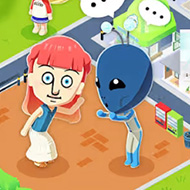
Tomodachi Life: Living the Dream doesn’t let you control a single Mii directly — the entire game is built around watching people you designed live their own lives and only stepping in when they ask. It’s the third entry in the series and the first since the 2013 Nintendo 3DS original, and it keeps that game’s core promise intact: this isn’t a life sim you steer, it’s one you supervise.
Miis That Act Without Waiting for You
Every Mii on your island — versions of yourself, family, friends, or fully original creations — behaves autonomously, developing relationships, holding opinions, and running into small problems entirely on their own schedule. Your role isn’t to direct their day-to-day actions but to respond when they come to you, usually with a question or a decision only you can weigh in on. That structure is closer to Animal Crossing’s ambient pacing than to a traditional life sim where you control one character’s every move.
Because Miis act independently, no two islands play out the same way even with similar starting populations. Relationships form based on the Miis’ own personalities interacting with each other, which means the specific drama, friendships, or rivalries you end up watching unfold are never something you scripted directly — you’re closer to an audience with occasional veto power than a director.
Designing an Island, Not Just Characters
Beyond populating the island with Miis, a real chunk of the game is architectural: placing homes, stores, and restaurants to give your growing community somewhere to actually live and interact. This design layer feeds back into the simulation side — where you place a restaurant affects which Miis end up crossing paths there, indirectly shaping the relationships that develop without you ever directly instructing anyone to become friends.
Inclusive Features That Drew Real Attention
Living the Dream expanded the series’ character customization to include same-sex relationships and non-binary Miis, and that expansion has been one of the most discussed aspects of the release. Gaming press and fans alike noted the inclusion as a meaningful, well-received update to a series whose earlier entry had drawn criticism for lacking exactly this kind of representation, and the shift has been credited with making the island simulation feel like a genuinely accurate mirror of the players building it.
- Design Miis based on yourself, friends, family, or entirely original characters
- Place homes, stores, and restaurants to shape how your island community interacts
- Let relationships and small conflicts develop autonomously among your Miis
- Step in when a Mii comes to you with a question or decision that needs your input
What Makes It Different From Watching, Not Playing
The biggest adjustment for new players coming from more hands-on life sims is accepting how little direct control the format actually gives you. There’s no way to force two Miis to become friends or to prevent a conflict you can see coming — you can only respond to what’s already happening. That hands-off structure is exactly what longtime fans of the original 3DS game point to as the series’ defining identity, and Living the Dream keeps that identity intact rather than modernizing it into something more conventionally controllable.
Do I control my Miis directly, like in other life sims?
No — Miis act autonomously based on their own personalities, and your involvement comes from responding to questions or decisions they bring to you rather than directing their actions moment to moment.
What’s new in Living the Dream compared to the original Tomodachi Life?
Expanded inclusive character options, including same-sex relationships and non-binary Miis, are among the most significant additions, alongside a fresh island setting and updated systems for placing homes, stores, and restaurants.
Tomodachi Life: Living the Dream succeeds by trusting its own restraint — letting an island full of autonomous Miis be occasionally messy, occasionally sweet, and mostly out of your hands. By the time your island’s community has grown into something with its own history and inside jokes you didn’t write, the game has already made its case for why watching, not controlling, was the right call all along.